Free AI audit: discover in 48 hours where your company saves time and money.
Ezelero Magazine

Practical AI to sell better across different markets.

Clear ideas, real examples and automations that a international company can understand, evaluate and implement without getting lost in theory.

Trade WhatsApp E-commerce Automation
international commerce team using artificial intelligence for online sales and orders
Commerce and e-commerce edition Editorial image generated with AI for Ezelero. 2026
Sales that don't cool downAutomatic tracking after each query or quote.
WhatsApp as a processNot only answer messages: organize leads, questions and next steps.
24/7 attentionImmediate response when the customer is ready to buy.
Freest teamLess repetition, more closing of sales and better human treatment.

Artificial intelligence for commerce and e-commerce: concrete examples from real life

Enough theory. Let's see, with real day-to-day cases, how this is applied in a store, a business or an online sale across different markets.

After so much talking about concepts, it's time to land. Because it is one thing to say "artificial intelligence can help your business" and quite another to show, with specific situations that you experience every day, where and how it fits. So let's get to that: practical examples, of the type of business that abounds across different markets, without technicalities and with our feet on the ground.

How to turn a repeat inquiry into a sales process

1ConsultationThe customer asks about price, availability or shipping.
2AI ResponseThe agent responds quickly and orders the purchase intention.
3TrackingIf the customer cools down, the system resumes the conversation.
4Human closeThe team enters when there is already a real opportunity.

The store that sells Instagram and WhatsApp

Think about a business that moves mainly through networks. He publishes his products on Instagram, and people who are interested write to him on WhatsApp. The flow sounds perfect, but in practice it is broken on one side: the volume of messages. Dozens of "how much does it cost?", "do you have it available?", "do you ship to that place?" come in at all hours, and no one is able to answer them all in time.

Here a WhatsApp agent changes the panorama. Instantly answer pricing, availability, shipping areas, and your usual questions, no matter the time. It sorts out who is just curious and who is ready to really buy. And when that determined client appears, it leaves them on track for a person to close the sale. The owner stops drowning in repeated messages and concentrates on shipping and selling.

Social networks

Quick responses to frequently asked questions and classification of customers who really want to buy.

Catalog and orders

Availability, prices, delivery areas and next steps without depending on someone being connected.

The business that lives on quotes

Now think about a business whose business depends on passing quotes: materials, services, products to order. The pattern is familiar and painful. The quote is sent and then the thread is lost. No one follows up because there is no time, and many customers who were interested simply cool down and leave without anyone touching them again.

Here the value is in systematic monitoring, that task that everyone knows needs to be done and that almost no one does because it is tedious. Automation can resume the conversation with someone who received a quote and did not respond, remind them, keep contact alive. It's not magic: it's simply not letting any interested party fall through the cracks. And in a listing business, rescuing even a portion of those lost clients changes the month.

WhatsApp stops being just a messaging channel and becomes part of the business process.

Trading with questions repeated techniques

There are areas where the customer always comes with the same doubts before purchasing. A hardware store, a parts store, a specialty products business. "Is this good for such a thing?" "What's the difference between this one and that one?" "Which one is best for me for such use?" These are frequently asked questions that consume staff time over and over again.

An agent well configured with business information can answer these frequently asked questions consistently and correctly, freeing the team for the attention that truly requires experience. The customer receives an immediate response, and the expert salesperson comes in only when his judgment is needed, not to repeat the basics for the umpteenth time.

1Fewer repeat queries for the team
2More monitoring of real opportunities
3Best response outside of normal hours

Online sales that does not rest

For a pure e-commerce business, where the store never closes, the service should also never close. The customer who is browsing at midnight, determined to buy but with one last question, needs an answer at that moment or loses momentum. Having someone answer that question right when it arises, at any time, is the difference between the sale that is made and the one that remains in the abandoned cart.

And it goes beyond the sale: after-sales service, questions about an order in progress, simple complaints. Much of that can be taken care of automatically and constantly, leaving people only what requires a human touch, such as a delicate complaint.

The common thread of all cases

If you look at the four examples, there is a repeating pattern. In all of them, technology takes care of the volume, the repetitive and the constant: answer the usual, follow up, attend at all hours. And it gives people time and energy back for what really closes sales and takes care of the customer. It does not replace the merchant or his people. It frees them from the mechanical so they can sell better.

That is the idea that should be recorded. Artificial intelligence in commerce is not a robot that serves in your place. It is a tool that takes care of the invisible and the tedious so that you and your team shine in what matters: sales, treatment and the relationship with the client.

From examples to your business

Most likely, reading these cases, you have recognized some part of your own operation. That query that gets lost at night, that quote that no one followed, that question that you answer forty times a day. There, right there, is your starting point. The examples are different businesses, but the underlying problem is the same, and so is the solution.

At Ezelero we adapt these solutions to the exact type of business you have, in international voseo and with fixed and transparent prices. I requested your free diagnosis by WhatsApp at +504 8930-5282 and let's see which of these cases is yours. No commitment.

Do you want to see which of these cases is yours?

We review your current process and tell you what should be automated first.

Choose what you want solve first

The blog is organized as a practical guide: start with your problem, not the newest article.

Quick guide

Where do I start?

If you have little time, use these routes. Each one groups articles by intention: understand AI, sell better, control costs or prepare your data.

Search the blog
02

I want to sell and serve better

WhatsApp, follow-up, after-hours service and Robby as commercial support.

04

I need to organize my company

Data, information architecture, strategy and common mistakes before investing.

Recommended readings

The articles that help you decide the most

See full library
Recent artificial intelligence news explained in Spanish for international companies
AI News

AI News as of August 6, 2026

Agents, security, own chips and changes in Google DeepMind explained without noise for companies across different markets.

Read summary
Cover of the Ezelero manual on Claude Opus 5 and prompts for new models
AI Prompts

Claude Opus 5 Manual: 12 keys to writing prompts

A practical guide to order better, spend less tokens and use new models more judiciously.

Read manual
Summary of recent artificial intelligence news for international companies
AI News

AI News as of July 30, 2026

Costs, agents, Copilot, Goal and security explained in Spanish for companies across different markets.

Read summary
Small business team using artificial intelligence to grow without replacing people
AI and employment

AI is not going to take away your employees

The data shows another story: SMEs that use AI can grow and hire more.

Read article
SME owner reviewing a web page created with artificial intelligence
Web + AI

Website with AI: what it solves and what it doesn't

A beautiful site is no longer enough: strategy, local SEO, WhatsApp and monitoring make the difference.

Read analysis
Small business evaluating OpenAI's new program to adopt artificial intelligence
OpenAI · SMEs

OpenAI launches program for small businesses

What the new wave of labor AI means for businesses in international markets.

Read analysis
Management team reviewing safe adoption of AI tools for programming
AI and programming

Why many companies still do not authorize AI for programming

Copilot, Claude Code, and ChatGPT can speed up development, but they require data, review, and governance rules.

Read guide
Artificial intelligence news explained in Spanish for international companies
AI News

AI news explained in Spanish

OpenAI, token costs and infrastructure: what this news means for companies across different markets.

Read summary
Management team analyzing artificial intelligence news, costs and results for companies
AI News

AI is no longer measured by the biggest headline

What recent news on costs, tokens, infrastructure and efficiency mean for businesses across different markets.

Read analysis
Management team evaluating the impact of Kimi K3 and new artificial intelligence models
AI Models

Moonshot AI's Kimi K3 enters the global race

What this new competitor to OpenAI and Anthropic means for companies in international markets.

Read analysis
Small business team using artificial intelligence to support growth
AI for SMEs

Artificial intelligence for small businesses

10 practical ways to grow with AI without replacing your people.

Read guide
AI diagnosis with numbers for international companies
Return

Does AI really suit your company?

The uncomfortable data from MIT, the cost trap and how to measure if AI does have a return.

Read article
Information Architecture for AI in SMEs: Connected Business Data on a Foundation
Data and AI

Information architecture: the invisible foundation

Why many SMEs fail not because of the algorithm, but because of having their data scattered.

Read article
Team learning to use artificial intelligence with judgment and cost control
Criterion

Why “using AI for everything” can be expensive

Forcing the team to use AI without rules can increase costs and lower quality.

Read article
Saleswoman managing customer conversations on WhatsApp with AI support
WhatsApp

WhatsApp is your most important sales channel

Automate without losing the human treatment that makes the client trust.

Read article
Complete blog library See all articles

Efficiency is the new keyword in the manufacturing industry. IA

This article now has its own page optimized for clear reading and an FAQ. The central idea: it is not whoever spends the most on AI who wins, but rather whoever obtains the most real value from each dollar or lempira invested.

Management team reviewing efficiency and return on investment in artificial intelligence

Read the full analysis

Includes explanation of Sun Valley, Coinbase, Vercel, multi-supplier strategy and what it means for companies across different markets.

Claude Fable 5 explained in easy: what it is and why it matters to your business

If you heard about Claude Fable 5 and didn't understand it, this guide is for you: without technicalities, without smoke and with a focus on businesses in international markets.

international city surrounded by mountains, without text or marks, for article about Claude Fable 5

If in recent weeks you heard about "Claude Fable 5" and you didn't understand it, this article is for you. No technicalities, no smoke. Just what you need to know as a business owner in any market.

First things first: what is a AI model?

Think of it like this: an AI model is like a digital employee who has read millions of books, web pages, and documents, and learned to understand and write human language. You ask him a question, and he answers you. You give him a task, and he does it.

ChatGPT is one of these models. Claude is another, created by a company called Anthropic. And Claude Fable 5 is the newest and most capable version of Claude available to the public.

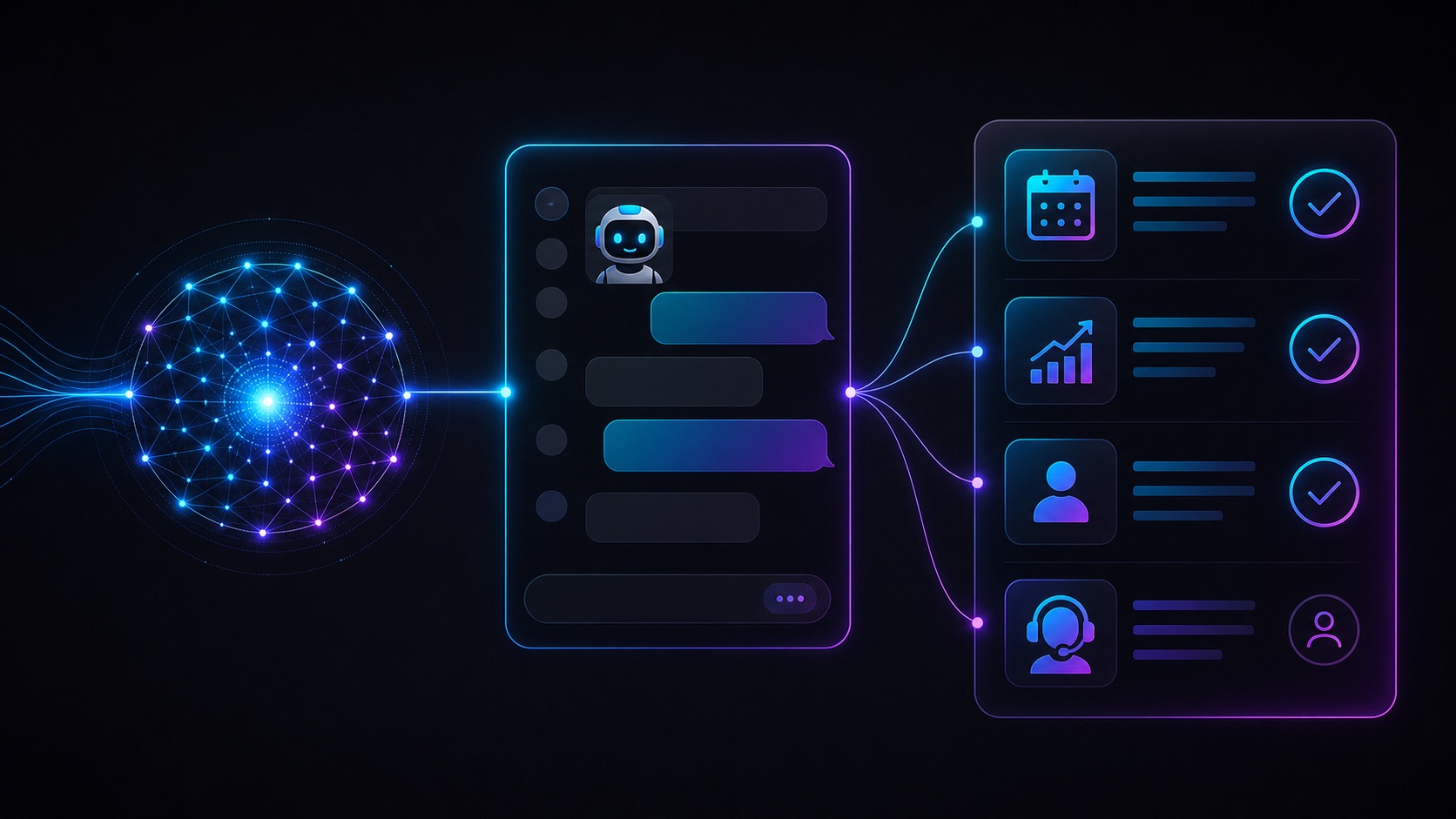
Abstract graphic of an AI model connected to a conversational agent and business processes

What's so special Claude Fable 5?

It is the first model of a new generation, the Claude 5 family, and is in a category superior to anything Anthropic had launched before. In simple words: it is the most intelligent model that this company makes available to the public.

And what does "smarter" mean in practice? Three things that do matter for a business:

Reason better

Understands problems with many pieces: sales of the month, suppliers, complete proposals and decisions with context.

Work longer

He stays on track with complex tasks, like a good employee who doesn't need you to repeat everything every five minutes.

It is more reliable

It reduces made-up responses and helps an agent speaking with customers be more serious and controlled.

Serves for agents

It doesn't just talk: it can follow steps, organize data and prepare opportunities for the human team.

One: reason better. Previous models were good at answering direct questions. New ones understand problems with many pieces: analyzing your sales for the month, comparing suppliers, putting together a complete proposal. They don't just answer; they think the problem.

Two: Work on long tasks without getting lost. Previously, AI “forgot” context in long conversations or projects. New models can stay on top of complex tasks from start to finish, like a good employee who doesn't need you to repeat instructions every five minutes.

Three: it is more reliable. One of the historical problems with AI is that it sometimes invents things with complete certainty. Each new generation reduces that problem. When AI speaks directly to your customers, as happens with a sales agent on WhatsApp, reliability is not a luxury, it is the minimum.

How is it different from other models like ChatGPT?

Let's be honest: all the top models - Claude, GPT, Gemini - are very capable, and each has their strengths. We are not going to tell you that one "destroys" the other. That's marketing, not reality.

What we can tell you from our experience working with these tools every day:

Claude excels at following instructions to the letter. If you tell him "never offer discounts" or "always respond in my brand tone," he respects that. For a business, this is gold.

He is strong in natural conversations in Spanish, including the close treatment we expect in international markets.

It was designed with an emphasis on honesty and security. Anthropic specializes in having its models admit when they don't know something, rather than making things up. For customer service, that's worth more than any exaggerated promises.

It is excellent for agent work: tasks where AI not only converses, but executes steps: scheduling appointments, qualifying leads, and passing the conversation to a human when it's time.

That's why at Ezelero we chose Claude as the brain of Robby, our WhatsApp sales agent.

Latino business owner reviewing artificial intelligence processes in an executive office

And what does this have to do with your business?

Straight to the point: Every time a better model comes out, the tools built on top of it automatically improve. It's as if your car's engine updates itself, for free, while you sleep.

A business in any market can today:

24/7Respond to clients at any time
LeadsQualify who is a serious customer
QuotesSchedule without picking up the phone

You can respond to clients via WhatsApp at any time, with quality responses. You can automatically qualify who is a serious customer and who is just asking. You can schedule appointments without anyone on the team picking up the phone. And it can free your people from repetitive tasks so they can focus on selling and serving better.

And something important that we always say at Ezelero: AI is not coming to replace your team, it is coming to amplify it. Robby attends the first conversation; your people close the sale.

AI is not coming to replace your team. It comes to amplify it.

where start?

You don't need to understand the technology in depth. That's what we are for. What you do need is to know where AI can help you specific business, because a clinic is not the same as a hardware store or a beauty salon.

That is why we offer a free forty-five minute diagnostic session: We review your processes together, identify where you are losing time or clients, and tell you honestly whether AI is right for you or not. No commitment and no forced sale.

Write to us by WhatsApp: +504 8930-5282
Or visit ezelero.com.

Do you want to know where AI fits into your business?

We review your process and honestly tell you if an agent like Robby makes sense for you.

Ezelero is an artificial intelligence consulting and implementation agency with an international focus. We help small and medium-sized companies in different markets use AI through practical solutions, fixed and transparent prices, and personal support.

Why many companies still do not take advantage of artificial intelligence

And where, really, is the opportunity for those who move first.

Business teams analyzing artificial intelligence opportunities

There is one fact that should keep you awake if you have a business in any market: of every ten organizations testing artificial intelligence, only a handful manage to convert that technology into real money. The majority remains in the experiment, in curiosity, in the "we're seeing it." And meanwhile, the clock is ticking.

The obvious question is: why? It's not for lack of tools. Today any entrepreneur can access technology that five years ago cost a fortune and was only available to large corporations. It's not for lack of money either, at least not in the first place. The problem is simpler and more uncomfortable at the same time: most business owners do not know for what use artificial intelligence within your own company.

The correct order does not start with the tool

1ProblemWhat takes away your time, clients or margin.
2Use caseWhere AI can help tomorrow.
3ImplementationConcrete, measurable and simple automation.
4ResultRecovered time, better served sales and useful data.

The real bottleneck is not technology

When you talk to a merchant, the owner of a beauty salon or the person who manages a distributor, almost no one tells you "I don't want AI." What they tell you is something else: "I don't know where to start." And that's the crux of the matter. The barrier is not technical, it is applied imagination. It remains to be seen the specific use case, the specific problem that technology can solve tomorrow.

This, far from being bad news, is a huge opportunity. Because it means that the advantage will not go to whoever has the most expensive software, but to whoever understands it first. where apply it. And that doesn't depend on the size of your company. It depends on how clearly you see your own business.

What happens when you just follow fashion

Much of what is sold today as “AI transformation” is smoke. You buy a tool because it is fashionable, it is advertised with great fanfare, and three months later no one uses it. The mistake is starting with the technology instead of starting with the problem.

The correct logic is the other way around. First you identify what takes up your time, what makes you lose clients, what repetitive task has you tied up. Then you look to see if there is a way to automate it or assist it with artificial intelligence. The tool is last, not first. Anyone who reverses that order ends up with an expensive subscription and zero results.

Where is the opportunity, specifically

Think about the most everyday aspects of your business. The queries that arrive on WhatsApp at eleven at night and that no one answers until the next day. The customer who asks the price three times because no one answered in time. The hours your computer spends copying data back and forth. Quote tracking that is lost because no one simply had the time.

Each of those cracks is silver that escapes. And they are just the type of problem where well-applied artificial intelligence pays off immediately: not to replace your people, but so that your people stop doing the mechanical and dedicate themselves to what really closes sales and builds customer loyalty.

The advantage does not go to those who buy more technology. The one who first understands where to apply it gets it.

He who moves first take advantage

In international markets we are still early in this curve. That's good and it's urgent at the same time. Well, because there is room to differentiate yourself before your competition wakes up. Urgent, because that window is not going to remain open forever. Whoever understands today how to apply AI to their operation will have an advantage that will be difficult to achieve in two years.

It's not about becoming a technology expert. It's about asking yourself the right question: What part of my business could work better if I stopped depending only on people's time and memory?

Find your first real use case

At Ezelero we help business owners in international markets answer exactly that question, without technicalities and without selling you smoke.

WhatsApp It is your most important sales channel: automate without losing the human touch

In international markets you do not sell by mail or through forms. You sell through WhatsApp. The question is whether you are taking advantage of it or wasting it.

Saleswoman managing customer conversations on WhatsApp with AI support

Let's do an honest exercise. Think about the last time a customer bought something from you. Where did he write to you? Most likely it was through WhatsApp. Here we don't operate like in other markets, where people fill out forms or send emails. In international markets, the deal is closed in the chat. And that completely changes the rules of the game.

The problem is that almost no one treats their WhatsApp as what it really is: the company's most important sales channel. We treat it as just another personal chat, attended to between one thing and another, with untimely responses and conversations that are lost. And every conversation that is lost is a sale that is gone.

The invisible cost of reply late

The international client does not wait. If he writes to you asking for a price and you don't answer him within minutes, he has already written to three others. The one who answers first often wins. Not because it's better, but because it was. The speed of response has become, without almost anyone noticing, one of the great competitive advantages of modern commerce.

And here comes the catch: you cannot be glued to the phone twenty-four hours a day. Neither does your team. The queries come at night, on the weekend, at lunchtime, just when you are in a meeting. Trying to answer everything by hand, always, on time, is a recipe for exhaustion and lost sales.

Speed

Responds when the customer still intends to buy.

Order

Classify queries, frequently asked questions and opportunities ready for human intervention.

Warmth

Maintains a natural manner and passes on the conversation when a person is needed.

Tracking

Don't let a quote or interested query be forgotten.

Automate is not robotize

This is where many people get scared, and rightly so. They have seen those horrible chatbots that answer meaningless things, that make you go around in an endless menu and that end up scaring away the customer instead of serving them. If that is automating, better not.

But that's just the old model. A well-made WhatsApp agent today does not feel like a machine. He converses naturally, in voice, understands what the client is asking and responds judiciously. And most importantly: he knows when to shut up and turn the conversation over to you. It does not replace humane treatment, it protects it.

What should I solve? a good agent

Think about everything that is repeated in your chat. "Are they open?" "How much does it cost?" "Where are they?" "Do you ship?" It's the same ten questions, over and over again, all day. An agent can handle that instantly, at any time, without you lifting a finger.

And it goes further. You can qualify the client while you talk: understand what they are looking for, how ready they are to buy, if it is worth it for you to intervene right now. When a hot customer appears, one with real intention to buy, he passes it on to you immediately. This way you stop wasting time on queries that go nowhere and focus on those that do close.

The goal is not to make you respond less. It's that you respond better, on time, without burning yourself out.

Human treatment is still the heart

Let's be clear: none of this replaces the warmth with which you and your team serve. In a country where trust and personal relationships are everything, that closeness is your greatest asset. Automation is not going to take that away from you. It takes away the mechanical part so that you have more time and more head for what really matters: the relationship with the client.

Robby, Ezelero's WhatsApp agent, is made for exactly this: dealing with repetitive international voseo, qualifying your customers, and passing you the ones who are ready to buy.

I turned WhatsApp into a sales process

We show how Robby would work in your real business, without commitment.

How to be a WhatsApp agent like Robby rate your clients while you sleep

The business doesn't stop when you fall asleep. The inquiries keep coming. The question is who is taking care of them.

AI agent arranging customer queries overnight

It's eleven at night. You've already closed, you've already had dinner, you're about to go to bed. But your business lives on on people's phones. Someone who saw your post on Instagram writes to you asking if you are still available. Another wants to know the price. A customer asks if you are open on Saturday. And you are not there. Those messages stay there, waiting, until tomorrow. And by tomorrow, several of those clients have already settled with another.

That is the reality of any business in any market. The lawsuit does not respect office hours. And for years, the only possible response was to resign: either you answer after hours, or you lose the consultation. Today there is a third option, and it changes the game completely.

Working while you sleep is no longer a metaphor

A well-configured WhatsApp agent does not sleep, does not get tired and is not distracted. While you rest, he attends to every message that comes in. But answering doesn't just mean answering with an automatic greeting. It means having a conversation with judgment: understanding what the person needs, giving them the correct information and, above all, finding out if that contact is worth gold or just curiosity.

We call that qualifying the customer. And it is, perhaps, the most valuable part of the entire process.

What does Robby do before giving you an opportunity?

1attendAnswer frequently asked questions at any time.
2understandDetect what the person is looking for and how ready they are.
3FilterSeparate curiosity from real purchase intention.
4DeliveryIt happens to you the cases where a person must close.

What does it mean qualify a client

Not everyone who writes to you is the same. There is the one who is just looking, the one who asks the price just to ask, the one who is comparing and there is still a long way to go before he decides. And there is the other: the one who already knows what he wants, has the budget and just needs a push to close. That last one is the one you can't let cool.

An agent like Robby reads those signals while talking. Does the person ask about availability for this week? Do you mention a budget? Does he specifically ask for a service you offer? Those clues say a lot. While you sleep, the agent collects and organizes them, separating what is a probable sale from what is just a lukewarm inquiry.

What you find in the morning

Imagine waking up and, instead of a bunch of messy messages that you have to go through one by one, finding your work already half done. Routine queries, already answered. Frequently asked questions, already resolved. And, marked aside, the customers who really matter: those who showed a real intention to buy and are waiting for you, the person, to take the final step.

That transforms your morning. Instead of starting your day putting out fires and catching up, you start right where the money is. Your energy goes to the conversations that close, not to the usual ten questions.

The balance: the machine filters, you close

Here is the key to why this works and doesn't scare anyone away. The agent does not intend to close the sale alone or pretend to be something he is not. Your job is to attend, inform and filter. The closure, the human moment, the final trust, I leave that up to you. When a hot customer appears, someone ready to buy, a complaint, a complex question, the agent immediately passes it to you for a person to attend to.

The business continues working. You rest. And in the morning, the customers that matter are already waiting for you.

Sleeping peacefully is also strategy

There is a benefit that is not measured in sales but is worth the same: stop feeling like you always have to be available. That pressure of checking the phone all the time, of not being able to disconnect even for a weekend, exhausts any business owner. Knowing that the queries are being attended to judiciously, even if you are not there, gives you something that the entrepreneur almost never has: peace of mind.

Test how Robby would qualify clients

Serve, qualify and deliver customers ready to buy, in international voice and at all hours.

The big ones time thieves in your business that artificial intelligence can take you off your back

The most expensive resource you have is not money. It's your time. And you're spending time on tasks that you shouldn't even be doing.

Business owner recovering time by automating repetitive tasks

Ask any business owner across different markets what they lack most, and they will rarely tell you "money" first. It will tell you time. Time to think, to sell, to grow, to have a life. Because the day to day of an entrepreneur is eaten up in small pieces: a task here, a message there, a report to put together, a follow-up to do. And at the end of the day, exhausted, you realize that you didn't advance anything important.

The problem is not that you work little. The thing is that much of your work is mechanical, repetitive and, frankly, unworthy of the person who took the risk of starting a business. Those are precisely the tasks that artificial intelligence can take off your shoulders. Let's name the time thieves with a first and last name.

1repeated questions
2Forgotten tracking
3Manual data

Thief number one: answer the same thing all day

The same questions, over and over again. The schedule, the location, the prices, if you make shipments, if you have availability. Multiply that by all the clients who write to you in a day and you have entire hours spent repeating information that never changes. It is the most obvious thief and the easiest to catch: a WhatsApp agent can answer all of that instantly, without you intervening.

Thief number two: the follow-up you never do

More money is lost here than you think. A client asks for a quote, you send it to them, and then... nothing. Nobody follows up because nobody had time. That client, who was already interested, gets cold and leaves. Systematic monitoring is one of the things that sells the most and is done the least, precisely because it is tedious. Automation can take care of remembering, of resuming the conversation, of not letting any interested party fall through the cracks.

Thief number three: pass data from one side to another

Copy the customer's name from the chat to a spreadsheet. Write down the order in a notebook and then transfer it to the system. Keep a list of who bought what. All this manual transfer of information not only takes up your time, but is full of errors. It's exactly the kind of task that good automation does in seconds and without mistakes.

Thief number four: put together the usual reports

How much did I sell this week? Which product moved the most? Who are my best clients? If to answer those questions you have to sit down and gather data from various sides, you are wasting hours that you could use to decide instead of collect. Technology can have that information ready and organized for when you need it.

Thief number five: out of hours care

We already said it, but it is worth repeating it because it hurts: the queries that arrive when you are not there and that remain unanswered until the next day. Each one is a sale at risk. Addressing that dead schedule without having to hire someone for the night shift is, perhaps, one of the clearest returns of applying AI in a small business.

Every hour that you stop spending on mechanics is an hour that you can invest in what really makes the business grow.

What you earn when you will recover time

Getting these tasks off your plate isn't just about convenience. It's strategy. Every hour that you stop spending on mechanics is an hour that you can invest in what really makes the business grow: thinking about the strategy, serving important clients well, taking care of your team, looking for new opportunities.

Artificial intelligence is not coming to replace people. It comes to take away the mechanical work so that people can do what only people can do. You didn't start a business to spend the day copying data and answering the same question forty times. You set it up to build something. Take back your time and dedicate it to that.

Let's detect your time thieves

We identify which ones affect you the most and how to eliminate them with specific automation.

Artificial intelligence does not replace your team: gives him superpowers

The fear is understandable. But it is poorly directed. The right question is not "is AI going to take away jobs?", but rather "what can my people do when they stop doing the mechanical thing?"

Business team using artificial intelligence as support to work better

Every time the topic of artificial intelligence comes up in a business, the same specter appears: "Is this going to put my people out of work?" It is a legitimate fear and it is worth taking it seriously, not dismissing it with a nice phrase. But when you look closely at how this works in practice, you discover that the story is quite different from the one fear tells.

The reality is that artificial intelligence, well applied in a small or medium-sized business, almost never replaces people. What it does is change their jobs. And, in most cases, they are improved.

The work that no one misses

Think about what your team does on a typical day. There are tasks that require human talent: serving a difficult customer well, closing a sale, solving an unexpected problem, using judgment. And there are others that are pure repetition: copying data, answering the same question, filling out forms, doing routine follow-ups. That second part is not where your people shine. It's where it wears out.

When artificial intelligence takes over the repetitiveness, no one on the team regrets it. Who likes to spend the morning copying information from a chat to a spreadsheet? Freeing your people from that is not taking away their jobs. It's taking away the worst job.

Well-applied AI levels up the team

1BeforeRepetition, manual copying and routine responses.
2AutomateThe machine absorbs volume and consistency.
3ReleaseThe person recovers time, energy and judgment.
4PowerThe team sells better, decides better and serves better.

From executor to strategist

Here comes the interesting part. When a person stops spending half their day on mechanical tasks, they are not left with nothing to do. Level up. The salesperson who no longer has to answer the usual ten questions can dedicate herself to closing hot customers with all her energy. Whoever kept reports by hand can now analyze those numbers and propose improvements. The team stops being a production line and becomes a group that thinks.

That's giving him superpowers. It is not science fiction: it is that each person performs in what truly makes them valuable, because the machine took away what was holding them back.

More capacity without more staff

There is another angle that for a business owner across different markets is pure gold. Growing usually means hiring, and hiring is expensive, slow, and risky. With artificial intelligence assuming the volume of repetitive things, your current team can serve much more than it did before, without you having to increase your payroll at the same rate as sales grow.

It's not that you replace people. The thing is that the people you already have are enough for more. Your business can grow without your personnel costs skyrocketing in the same proportion. For an entrepreneur who knows the weight of each salary, that difference is enormous.

The warmth is not automated

In international markets, business is built on trust and personal relationships. The client returns to the salon not only because of the service, but because of how she is treated. The customer buys from the usual customer because they trust him. A machine cannot do that, and it should not attempt to do so.

That's why the idea is not to put a machine between you and your client. It is putting the machine behind, doing the invisible work, so that ahead there is more time and more human energy for what truly builds loyalty: the treatment, the attention, the closeness. Well-used technology does not cool the relationship with the customer. It protects it, because it gives your people the time to cultivate it.

The right fear is not that AI will replace your team. It's staying behind while your competition boosts theirs.

The fear correct

If there's one thing a business owner should fear, it's not AI replacing their team. It's about being left behind while the competition gives yours superpowers. The business that frees its people from the mechanical will move faster, serve better and grow with less cost than the one that continues to do everything by hand. That is the real gap that is opening.

The question, then, is not whether you are going to replace your team. It's what your team will be able to achieve when you take the weight off of them.

Empower your team without losing human treatment

We design solutions that remove the mechanical and leave more space to sell, serve and decide better.

Getting started: how to identify where you should apply artificial intelligence in your own business

You don't need to be a technology expert. You need to learn to ask yourself the right questions about your business.

Business owners identifying first use cases for artificial intelligence

The question we get asked most at Ezelero is not "what is artificial intelligence?" Almost everyone understands that in broad strokes. The question that really weighs is another: "okay, but where do I start, in my business?" And it is the right question, because the success or failure of any technology project is decided there, in the first step.

The good news is that identifying where it is best for you to apply AI does not require technical knowledge. It requires knowing your own business and looking at it with the right eyes. Here we leave you a practical way to do it, without technicalities.

A simple map to find your first use case

1RepetitionWrite down what your team does over and over again.
2LeakDetect where customers, time or money are lost.
3FilterIt will separate the mechanical from the truly human.
4PriorityStart with one painful, measurable thing.

First step: write down what is repeated

For a week, pay attention to the tasks that you and your team do over and over again, almost automatically. The questions you always answer the same. The data you copy from one place to another. The processes that are repeated with each client or with each order. Write them down. Don't filter yet, just make the list.

Repetitiveness is the raw material of automation. If you do something fifty times a week always in the same way, it is a perfect candidate. Technology shines precisely in what is predictable and constant, which is where people get bored and make mistakes.

Second step: identify where you are the money escapes

Now change the lens. Instead of looking for the repetitive, look for the cracks where your money is going. Where do you lose clients? Maybe in the queries that come at night and no one responds. Maybe on quotes you never follow up on. Maybe in the client who gets tired of waiting for a response and goes with another.

Each of those cracks has a real cost, even if you don't see it on a bill. Naming those leaks is key, because that's where the investment in technology pays for itself the fastest.

Third step: separate the mechanical from the human

From your list, mark which tasks require real human judgment: closing a complicated sale, addressing a sensitive complaint, making a decision. And which ones are purely mechanical. The rule is simple: the mechanical is a candidate for automation; The human remains with the people, but freed from the mechanical weight.

This step avoids the most common mistake: wanting to automate what you shouldn't. Warmth, judgment, and customer relations are not automated. What is automated is everything that surrounds those moments so that your people reach them with time and energy.

Fourth step: start with one thing

Don't try to transform everything at once. Anyone who starts out wanting to automate ten processes at once ends up overwhelmed and abandons. He who starts with just one, the most painful, solves it well and sees results, gains the confidence to continue.

I chose the problem that hurts you the most from your entire list. The one that costs you the most money or steals the most time from you. Start there, figure it out, measure the result. That first concrete victory is worth more than any ambitious plan on paper.

Fifth step: asked for help to see what you don't see

There is a natural limit to doing this exercise alone: you are too deep in your own business to see everything clearly. Sometimes the biggest problem is just the one that you have so normalized that you don't even notice it. An external view, from someone who has seen how many businesses work, helps you detect opportunities that are invisible to you because they are so everyday.

It is not about delegating the decision, but about having someone to think about it with. The owner is still the one who knows his business best; a good ally just helps you see where to apply the right tool.

What part of my business today depends only on people's time, memory and energy?

The question that sums it up everything

If you are left with only one idea from all of this, let it be that question. The answers are your map. There it is, with first and last name, where you should start.

Start with the right step

At Ezelero we take this journey with you, without technicalities and with our feet on the ground.

Customer service twenty four hours, without hiring more staff

Your business closes at six. Your clients don't stop needing you at six. Therein lies the problem, and therein lies the opportunity.

international business serving clients after hours with AI automation

There is a time of day that almost no business owner thinks of as what it really is: a wasted gold mine. It is the time when you have already closed but your clients are still awake. The night, the weekend, the holiday. The hours when people, calm after their own day, finally have time to write to you, ask questions, decide to buy. And right at that moment, there is no one on the other side.

For years, the only way to handle those hours was to hire someone to cover them. And for most small and medium-sized businesses across different markets, that simply didn't add up to the numbers. A night shift, an extra salary, benefits, everything to meet an uncertain volume. It didn't close. So the decision, by default, was to resign ourselves to losing those consultations.

Today that equation changed.

The real cost of not being available

A potential client finds you on Instagram on a Sunday afternoon. He is interested in what you offer. He writes to you. And he doesn't receive a response until Monday mid-morning. By then, two things may have happened: either you already bought from someone else who responded, or your impulse cooled and the purchase you were about to make is no longer made.

This is repeated every day, silently, without appearing in any report. You're not going to see a line that says "lost sales due to failure to respond on time." But they are there, and they add up. It is one of the most expensive and most invisible leaks that a business has.

After closing

Nighttime queries that were previously left waiting now receive a real response.

weekend

The client decides when they have time, not when your office is open.

Without more form

You extend availability without adding a full shift of staff.

Wake-up priority

Important opportunities are ordered to close the next day.

Full availability without total payroll

The alternative that did not exist before is to have a WhatsApp agent attending to those dead hours. He doesn't get tired, he doesn't charge overtime, he doesn't ask for a holiday off. He is there at one in the morning with the same disposition as at one in the afternoon, answering with discretion and in voice, as if he were part of your team.

The difference with hiring someone is brutal in terms of cost. You are not paying an additional salary to cover an uncertain schedule. You are extending the availability of your business around the clock for a fraction of what it would cost to do it with staff.

Attending is not only answer

"Twenty-four hour service" does not mean an answering machine. A good agent doesn't blurt out a generic "we'll get back to you during business hours" message. That doesn't serve anyone. What it does is have a real conversation: it answers what the client asks, gives them the information they need, guides them and, when it detects that they are a client ready to buy, it leaves everything on track so that you can close as soon as you are available.

The client who writes at midnight does not hit a wall. It comes across real attention. Your question is resolved or, if you require a person, it is registered and prioritized so that in the morning the first thing you do is attend to it.

Your business gains presence. You gain life. It's no small thing.

Rest too account

There is a benefit for you that is not measured in sales. The permanent availability of your business no longer depends on your permanent personal availability. You can disconnect, have a quiet dinner, sleep, spend Sunday with your family, knowing that the queries are being attended to judiciously.

Always be, without being always you

Your clients need you at times when neither you nor your team can be there. Before, the only way out was to lose those opportunities or pay dearly to cover them. Today you can be available at all times without that meaning more payroll or less rest for you.

I attended after hours without living glued to the phone

Robby attends at any time in international voseo and leaves you ready for clients who are about to buy.

The most common myths about artificial intelligence that stop international businesses

It's not technology that stops you the most. They are the wrong ideas you have about her. Let's take them apart one by one.

international businessmen clarifying myths about artificial intelligence

When a business owner across different markets doesn't take the step toward artificial intelligence, it's rarely because they tried it and it didn't work. It's almost always because something stopped you before you started: an idea, a belief, a circulating myth that sounds reasonable but doesn't stand up to honest examination. These myths are costly, because they keep good businesses paralyzed while the opportunity passes.

Six myths that should be reviewed before deciding

1SizeIt's not just for large companies.
2TeamIt does not replace well applied; power.
3CostIt must be compared against what you already lose.
4MomentWaiting also has a cost.

Myth one: "that's just for large companies"

It is the most widespread myth and the most false. The idea that artificial intelligence is something for corporations with huge budgets came from a time that has long since passed. A few years ago it was true: technology cost fortunes and required enormous technical equipment. Today it is exactly the opposite. The tools have been democratized, and many times it is the small business that benefits the fastest, because they can apply a change and see results immediately.

Myth two: "I'm going to leave my people no job"

This fear is understandable, but it is misdirected. In practice, in small and medium-sized businesses, AI almost never replaces people: it changes their jobs and improves them. Take away the mechanical and repetitive from your team, which is the part that no one enjoys, so that they can dedicate themselves to what truly requires human talent.

Myth three: "it's too complicated for me"

Many people believe that to take advantage of artificial intelligence you have to understand programming or impossible technical things. It's not like that. You don't need to know how the engine works inside, just as you don't need to be a mechanic to drive your car. What you need is to know your business and have someone who translates your problems into solutions.

Myth four: "it is very expensive"

Two things are confused here. Yes, there are technology projects that cost fortunes, but those are not what a small or medium-sized business needs. Well-sized solutions for a business or salon across different markets are reasonably priced and, more importantly, pay for themselves when they address the right problem.

Myth five: "chatbots scare away to clients"

This myth has a real basis, and that is why it must be treated with respect. We've all experienced horrible bots that make you spin around in a meaningless menu. But that is old and poorly made technology. A modern, well-configured agent converses naturally, understands what is being asked, responds judiciously, and knows when to hand the conversation over to a person.

Myth six: "It's still too early, I better hope"

This is perhaps the most dangerous, because it sounds prudent. "Better try others first and I'll see." The problem is that while you wait, your competition doesn't necessarily wait. In international markets we are early in this curve, yes, and that is precisely why whoever moves now has an advantage that is difficult to achieve later.

What's holding you back isn't always a real obstacle. Sometimes it's an old idea that no longer applies.

The real one brake

If you look carefully, none of these myths talk about the technology itself. They all talk about perceptions, inherited fears, outdated information. And that's the good news: what's holding you back is not a real obstacle, it's an idea that can be corrected. The day you change your belief, the path opens.

I decided with information, not with myths

We explain things clearly, without smoke and without technicalities.

Is it really worth automating? Let's do the honest accounts, without nice promises

Anyone can promise you wonders. The serious thing is to sit down and calculate. We teach you how to make the number yourself.

Businessman calculating if an automation is worth it

In the world of technology, there are plenty of grandiose promises. "Multiply your sales." "Revolutionize your business." "Guaranteed results." At Ezelero we don't work like that, and we are going to explain why with a practical exercise: instead of promising you anything, we are going to teach you how to do the math yourself so that you can decide with a cool head.

Automation makes sense in many cases, but not all, and a serious business owner deserves numbers, not slogans.

The simple account: investment against current loss

1CostHow much does the solution cost, without fine print.
2LossWhat sales, hours or follow-ups you lost today.
3RecoveryWhat part can realistically be rescued.
4DecisionIf the number works, you advance; If not, adjust.

Start with the cost side, what is the easy one

The first thing is the most specific: how much the solution costs. Here the rule is total transparency. You have to know, before deciding, exactly how much you are going to pay, without surprises or fine print. A fixed and clear price. If someone can't tell you precisely how much what they offer costs, that's a bad sign.

The side that almost no one calculates: what you are already losing

The question is not just “how much does it cost me to automate?” It's "how much is it costing me NOT to do it?" And that number, even if it doesn't appear on any invoice, is usually bigger than you think.

How many queries do you receive after hours that are left unanswered? If even a few of those a week ended up on sale, how much would it add up to a month? How many hours does your team spend on mechanical tasks that could be automated? Put those hours in money according to what you pay. How many quotes go cold due to lack of follow-up?

1Clear investment
2Current monthly loss
3Probable recovery

The number that matters really

Now join the two columns. On the one hand, what the solution costs. On the other hand, what you are losing every month by not having it. If what you recover clearly exceeds what you invest, automating is worth it, and the calculation tells you this without the need for faith. If you don't get over it, then it's not the time or the right solution, and it's better to know beforehand.

Beware of two mistakes calculation

The first trap is to underestimate what you lose. Since these losses are invisible, they do not appear on a bill, the tendency is to ignore them. The second trap is the opposite: letting yourself be dazzled by inflated numbers that someone promises you. Be wary of anyone who guarantees specific results or gives you magical percentages.

Why don't we believe in the discounts

At Ezelero we do not give discounts. It's not stubbornness: it's respect. When someone lowers their price at the first pressure, they are telling you that the original price was inflated. Our logic is different. The price is fair and remains fixed; If you need more, what grows is the value you receive: more services, more reach, more support.

Don't automate because it's fashionable. Sit down, make the two columns and let the number decide.

I decided with the calculator, not with emotion

If the numbers work, go ahead with confidence. If they don't work, wait or look for another solution. That is the only serious way to make the decision, and it is exactly the way we are going to help you make it.

Let's do the math with your own numbers

We help you calculate with transparency, without inflated promises.